

Why this change?
Following the implementation of the European directive of October 2014, fuels are represented by geometric shapes with a letter and a number. These pictograms have been the same in all petrol stations in the European Union since October 12, 2018.
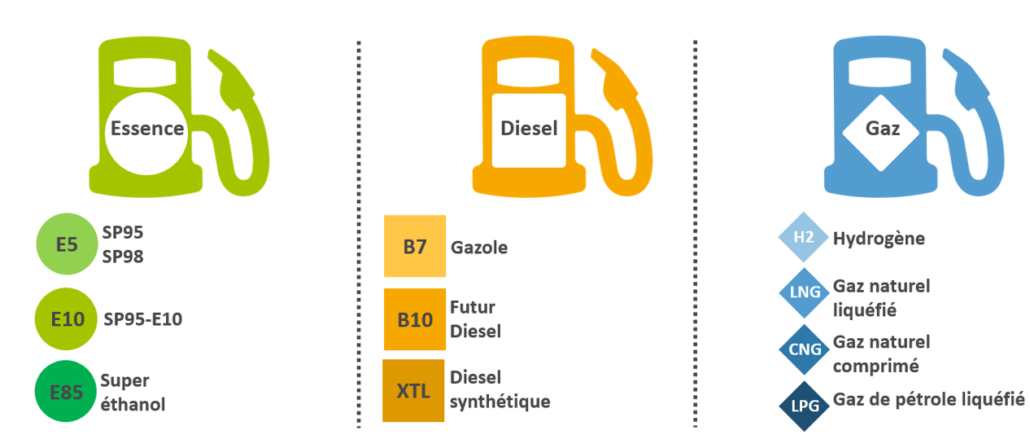
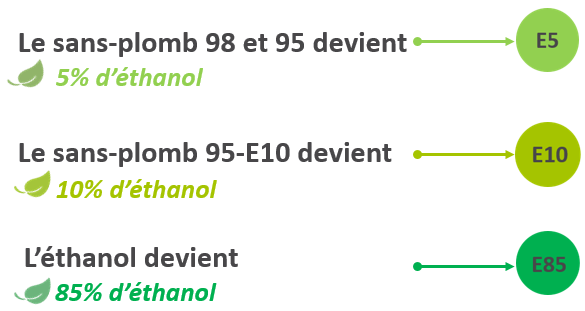
Petrol is now E5, E10 and E85, explanation:
The label is round and green. Inside, there is an "E" to designate the name of the fuel and a number indicating the biofuel content.
And what about diesel?
Diesel, the most consumed fuel in France, is also adopting new codes: 
"B" stands for Biodiesel, followed by a number indicating the biofuel content; B10, meanwhile, corresponds to Cold Weather Diesel. The new labeling incorporates "XTL" for future synthetic diesel fuels.
The means
- To avoid any confusion, vehicles sold in Europe from October 12th onwards will have the appropriate fuel label affixed to the fuel filler flap.

- The European standardization of fuels aims not only to simplify identification for consumers but also to highlight the proportion of biofuel in their composition.
The EU's stated objective is: " to support the deployment of a continuous network of infrastructure for alternative fuels in the European Union"
New fuels or "biofuels"
The new fuels, or "biofuels," are diamond-shaped, making them easily recognizable, in addition to their white color with blue outlines. As they are constantly being developed, their presence will become increasingly noticeable at service stations to meet the demands of new consumers.
The latest on…: Current state of biofuels
In 2015 , alternative fuels to petroleum petrol and diesel, which are constantly increasing, represented 7.1% of fuels consumed compared to 6.7% in 2014.
A change intended to be reassuring
The change is happening gradually; since October 12th the new labels have been appearing, however the old ones will not disappear.